

Perfect Medium Rare Oven Roasted Prime Rib: the mere mention of this luxurious cut of beef conjures images of holiday feasts and celebratory dinners. It’s a dish that whispers of indulgence, of rich, savory flavors, and a melt-in-your-mouth texture that’s simply unparalleled. For many, achieving that ideal rosy pink interior, kissed with a deeply browned crust, feels like the culinary equivalent of striking gold. But what if I told you that the secret to a truly spectacular Perfect Medium Rare Oven Roasted Prime Rib isn’t some arcane chef’s trick, but a straightforward, foolproof method you can master right in your own kitchen? This isn’t just a roast; it’s an experience. It’s the centerpiece that garners gasps of delight, the dish that leaves everyone at the table savoring every single bite, wishing the meal would never end.

Ingredients:
- butter (enough to smear over entire roast)
- sea salt (to taste)
- black pepper
- 3 tablespoons garlic clove, minced
- 4 pound boneless ribeye roast (at room temperature)
Preparation and Roasting
To achieve the Perfect Medium Rare Oven Roasted Prime Rib, the first crucial step is ensuring your 4-pound boneless ribeye roast is at room temperature. This typically means taking it out of the refrigerator at least 2-3 hours before you plan to start cooking. Bringing the roast to room temperature ensures even cooking throughout. If you cook a cold roast, the outside will be cooked while the inside remains underdone, creating an inconsistent texture.
Next, let’s prepare the flavorful coating. In a small bowl, combine your softened butter with the minced garlic. You want to create a paste-like consistency that will adhere well to the surface of the roast. Don’t be shy with the butter; it contributes to both flavor and a beautiful crust. Season generously with sea salt and freshly ground black pepper. Remember, the roast is quite large, so you need ample seasoning to penetrate the meat. I like to use a good amount of sea salt, and then grind fresh black pepper over it. The salt will help to draw out some moisture, creating a better sear, while the pepper adds a lovely pungent kick.
Once your roast is at room temperature and your garlic-butter mixture is ready, it’s time to coat the prime rib. Place the roast on a sturdy baking sheet or in a roasting pan. Using your hands or a pastry brush, liberally smear the garlic-butter mixture all over the entire surface of the roast. Make sure to get into any crevices and cover the top, bottom, and sides. This coating not only infuses the meat with incredible flavor from the garlic and butter but also helps to create a wonderfully browned and slightly crispy exterior during the roasting process.
Preheat your oven to a high temperature, around 450 degrees Fahrenheit (230 degrees Celsius). This initial high heat is essential for searing the outside of the roast, locking in the juices and developing a delicious crust. Once the oven is fully preheated, carefully place the seasoned and buttered prime rib into the hot oven.
The Roasting Process
Allow the prime rib to roast at 450 degrees Fahrenheit for approximately 15 minutes. This initial blast of heat is critical for that perfect sear. After these 15 minutes, reduce the oven temperature to 325 degrees Fahrenheit (160 degrees Celsius). This lower temperature will allow the roast to cook gently and evenly to your desired level of doneness without burning the exterior.
Continue roasting at 325 degrees Fahrenheit. The total roasting time will depend on the size of your roast and your oven’s calibration, but for a 4-pound roast aiming for medium-rare, you’re looking at approximately 15-18 minutes per pound. This means a total roasting time of roughly 1 hour and 20 minutes to 1 hour and 30 minutes after reducing the oven temperature. It is highly recommended to use a meat thermometer to ensure accuracy. Insert the thermometer into the thickest part of the roast, avoiding any bone. For medium-rare, you’re looking for an internal temperature of 125-130 degrees Fahrenheit (52-54 degrees Celsius). Remember that the temperature will continue to rise by about 5-10 degrees Fahrenheit as it rests.
Resting and Carving
Once your prime rib has reached the target internal temperature, carefully remove it from the oven. It is absolutely crucial to let the roast rest. Transfer the roast to a cutting board and loosely tent it with aluminum foil. This resting period is just as important as the cooking itself. Allowing the meat to rest for at least 15-20 minutes (or even up to 30 minutes for a larger roast) allows the juices to redistribute throughout the meat. If you cut into it immediately, all those delicious juices will run out onto the cutting board, leaving you with a dry roast. This resting period allows the fibers to relax and reabsorb the moisture, resulting in a supremely tender and juicy prime rib.
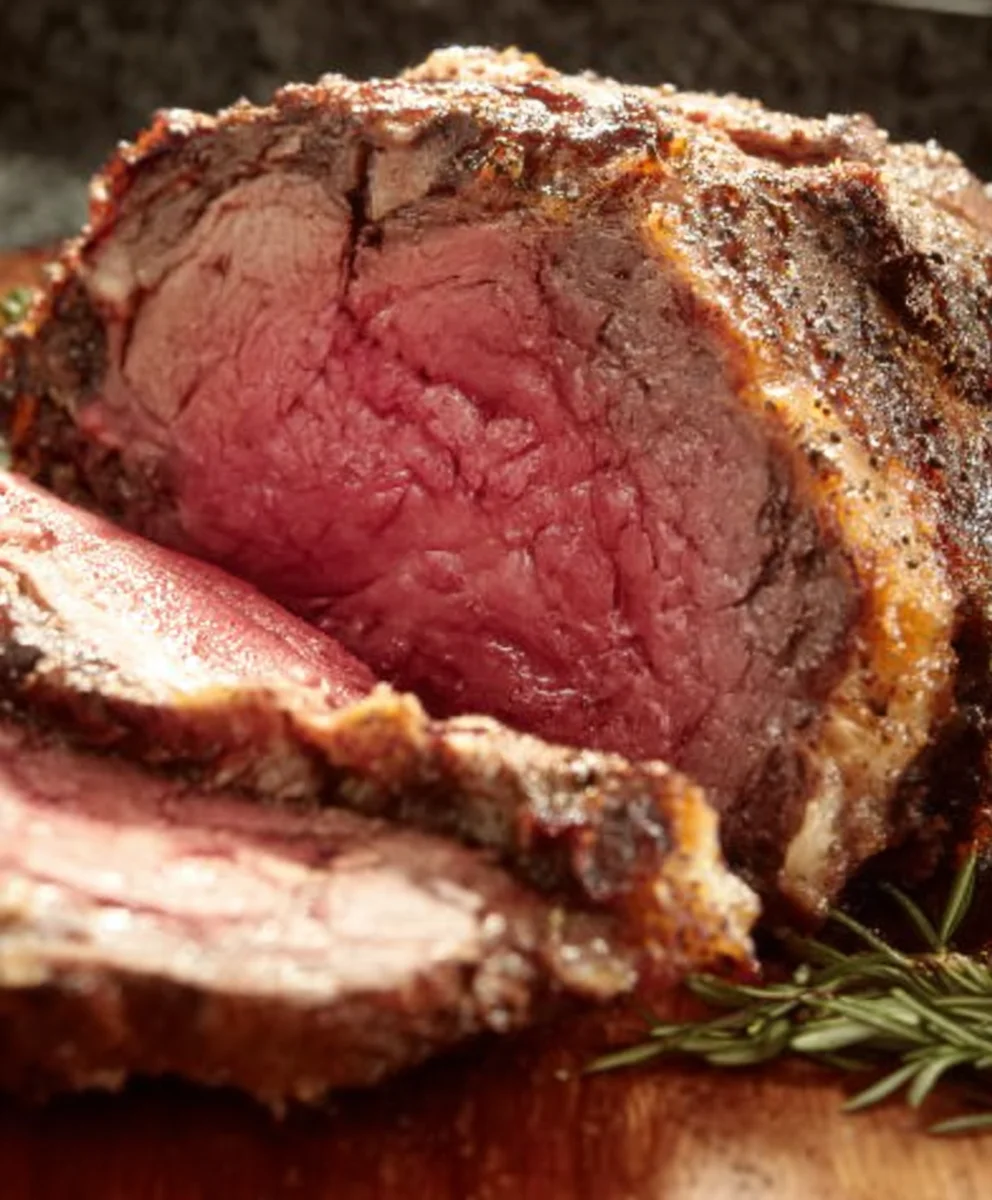
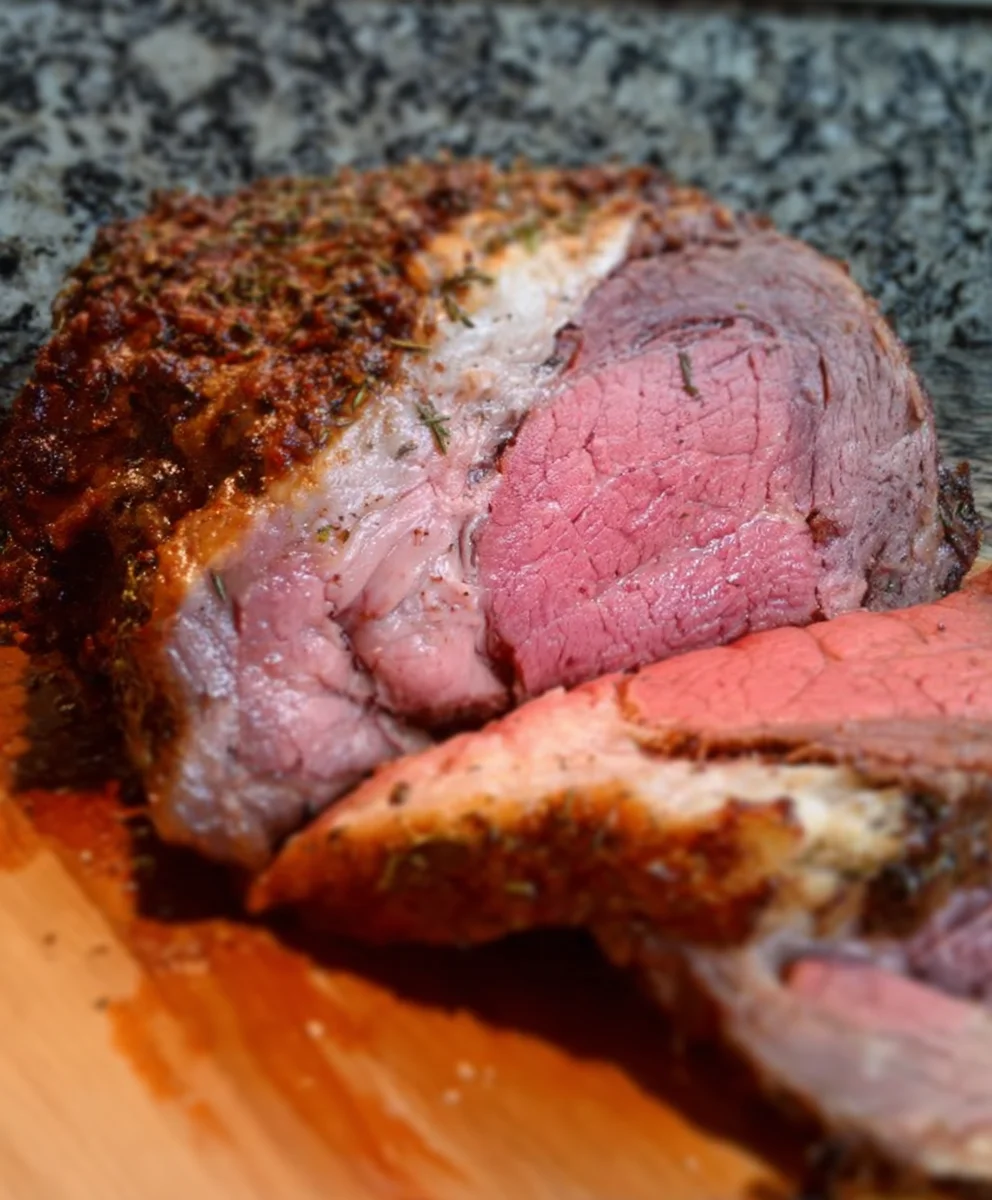
After the resting period, it’s time to carve. Using a sharp carving knife, slice the prime rib into desired thicknesses. For a truly exceptional experience, aim for slices that are about ½ inch thick. You should see a beautiful band of pink in the center, indicating your perfect medium-rare doneness. Serve immediately and enjoy the fruits of your labor.
Conclusion:
You’ve now got the blueprint for creating a showstopping meal: the Perfect Medium Rare Oven Roasted Prime Rib. This recipe, with its simple yet effective technique, ensures a succulent, flavorful roast every time. The beautiful pink center and tender texture are truly a culinary achievement that will impress your guests or simply make a weeknight feel special. Don’t shy away from this impressive cut; with these instructions, you’re well on your way to mastering it.
For serving suggestions, a classic horseradish cream sauce is a must, alongside roasted root vegetables or a creamy mashed potato gratin. If you’re feeling adventurous, consider a red wine reduction sauce for an extra layer of richness. For variations, you can experiment with different herb rubs – rosemary and thyme are classic, but garlic and paprika can add a delightful twist. Don’t be afraid to adjust the resting time slightly based on your oven’s unique characteristics. Enjoy the process, savor the aroma, and most importantly, indulge in every delicious bite of your Perfect Medium Rare Oven Roasted Prime Rib!
Frequently Asked Questions:
What is the best internal temperature for medium-rare prime rib?
For a perfect medium-rare, you’re aiming for an internal temperature of 125-130°F (51-54°C) when you pull it from the oven. Remember that the temperature will continue to rise a few degrees as it rests.
Can I prepare the prime rib ahead of time?
Yes, you can season the prime rib and let it sit in the refrigerator, uncovered, for up to 24 hours. This allows the salt to penetrate the meat and the surface to dry out slightly, which helps with browning. Bring it to room temperature for about 1-2 hours before roasting.
My roast is unevenly cooked. What did I do wrong?
Uneven cooking can often be attributed to starting with a roast that isn’t at room temperature, or placing it in a too-hot oven too quickly. Ensuring the roast is properly rested at room temperature before cooking and following the initial searing temperature specified in the recipe are crucial steps to avoid this.
Perfect Oven Roasted Prime Rib-Medium Rare
A step-by-step guide to achieving a perfectly roasted, medium-rare prime rib with a flavorful garlic-butter crust.
Ingredients
-
butter (enough to smear over entire roast)
-
sea salt (to taste)
-
black pepper
-
3 tablespoons garlic clove, minced
-
4 pound boneless ribeye roast (at room temperature)
Instructions
-
Step 1
Ensure your 4-pound boneless ribeye roast is at room temperature by taking it out of the refrigerator 2-3 hours before cooking for even cooking. -
Step 2
In a small bowl, combine softened butter with minced garlic to create a paste. Season generously with sea salt and freshly ground black pepper. -
Step 3
Liberally smear the garlic-butter mixture all over the entire surface of the roast, ensuring good coverage for flavor and crust development. -
Step 4
Preheat your oven to 450°F (230°C). Place the seasoned and buttered prime rib on a baking sheet or roasting pan and roast for approximately 15 minutes to sear the exterior. -
Step 5
Reduce the oven temperature to 325°F (160°C). Continue roasting at this temperature for about 15-18 minutes per pound, aiming for an internal temperature of 125-130°F (52-54°C) for medium-rare. -
Step 6
Once the target temperature is reached, remove the roast from the oven and loosely tent with aluminum foil. Let it rest for at least 15-20 minutes to allow juices to redistribute. -
Step 7
Carve the prime rib into ½ inch thick slices using a sharp knife and serve immediately.
Important Information
Nutrition Facts (Per Serving)
It is important to consider this information as approximate and not to use it as definitive health advice.
Allergy Information
Please check ingredients for potential allergens and consult a health professional if in doubt.
Leave a Comment