


Miso Soup Recipe – ah, the comforting embrace of a steaming bowl! For many of us, miso soup isn’t just a dish; it’s a warm hug from the inside out, a culinary whisper of home, and a delightful prelude to any Japanese meal. We absolutely adore this umami-rich elixir for its incredible depth of flavor, achieved with surprisingly few ingredients. What truly makes this simple soup so special is the magic of fermented soybean paste, its savory, slightly sweet, and wonderfully complex profile creating a truly satisfying experience.
There’s something incredibly grounding about preparing and enjoying a bowl of this iconic Japanese staple. Whether you’re a seasoned home cook or just starting your culinary adventures, mastering a delicious miso soup recipe is a rewarding and accessible achievement. It’s the perfect way to start a weeknight dinner, a delightful light lunch, or even a soothing pick-me-up on a chilly day. Let’s dive into creating your own perfect bowl of miso soup!

Miso Soup Recipe
There’s something incredibly comforting and soul-warming about a steaming bowl of miso soup. It’s a staple in Japanese cuisine for a reason: it’s incredibly simple to make, incredibly versatile, and packed with delicious umami flavor. Forget those instant packets; making authentic miso soup from scratch is a surprisingly quick and rewarding process. It’s the perfect accompaniment to any meal, or a light and nourishing dish all on its own. Let’s dive into how to create this delightful soup in your own kitchen.
Ingredients:
Cooking Instructions
The beauty of miso soup lies in its simplicity. Most of the work involves preparing your ingredients and then gently bringin extractg them together. We’re aiming for a delicate balance of flavors, so avoid boiling the soup aggressively once the miso is added, as this can diminish its nuanced taste and beneficial properties.
Preparing the Dashi Base
Our miso soup journey begin extracts with the dashi. Dashi is a fundamental Japanese stock that forms the savory foundation of many dishes, including miso soup. While you can purchase instant dashi granules, making it from scratch, even a simplified version, adds an unparalleled depth of flavor. For this recipe, we’ll assume you have your 2½ cups of dashi ready. If you’re making it from scratch, a common method involves combining water with kombu (dried kelp) and katsuobushi (dried bonito flakes). Gently heat the water with the kombu until just before boiling, then remove the kombu. Add the katsuobushi, bring to a simmer for about 30 seconds, then turn off the heat and let it steep for a few minutes before straining. This process yields a clear, light broth with a characteristic savory and slightly oceanic flavor. The quality of your dashi will directly impact the final taste of your miso soup, so it’s worth the effort if you have the time.
Rehydrating the Seaweed
Next, let’s prepare our dried seaweed. The dried seaweed you’ll use is typically wakame. It looks like small, brittle flakes or threads before rehydration. To bring it back to life, place the heaping tablespoon of dried seaweed in a small bowl and cover it with cool water. You’ll be amazed at how quickly it expands! Within a minute or two, it will soften and plump up, resembling fresh seaweed. Once rehydrated, gently drain any excess water. Don’t be tempted to squeeze out all the liquid; a little residual moisture is fine. If you’ve used too much dried seaweed and it seems like too much for your desired soup consistency, you can always discard a little at this stage. The seaweed adds a subtle brininess and a pleasant chewy texture to the soup.
Preparing the Tofu
For our tofu, we’re using silken tofu. Silken tofu has a very soft, delicate texture that melts in your mouth. This makes it ideal for miso soup. Take your 4 oz block of silken tofu and, using a knife, carefully cut it into small, bite-sized pieces. Think about the size of your spoonful when you’re cutting the tofu. You want pieces that are easy to scoop up with a spoon and are proportional to the other ingredients in the soup. Be gentle with silken tofu, as it can break apart easily. You can even simply scoop out pieces with a spoon if you’re feeling particularly gentle. These delicate cubes will add a lovely soft texture and a creamy, mild element to the soup.
Warming the Dashi and Adding Ingredients
Now for the main event: assembling the soup. Pour your 2½ cups of dashi into a medium saucepan. Place the saucepan over medium heat and bring the dashi to a gentle simmer. We don’t want a rolling boil, just a soft, consistent simmer. Once the dashi is simmering, add your rehydrated seaweed and the cut silken tofu. Let these simmer gently in the dashi for about 1 to 2 minutes. This short cooking time is just enough to warm the tofu through and allow the flavors of the seaweed to meld with the dashi. Avoid overcooking at this stage, as we want the tofu to retain its delicate texture.
Incorporating the Miso Paste
This is the most crucial step for achieving that signature miso flavor. Remove the saucepan from the heat. This is very important! Boiling miso paste can destroy its delicate flavor and beneficial probiotics. In a small bowl, place your 2-2½ tablespoons of miso paste. Gradually add a ladleful of the warm dashi mixture from the saucepan into the bowl with the miso paste. Whisk gently with a fork or chopsticks until the miso paste is completely dissolved and forms a smooth liquid. This process, called “tempering” the miso, helps to ensure that the miso dissolves evenly into the soup without clumping. You can adjust the amount of miso paste to your preference. Start with 2 tablespoons, taste, and add more if you desire a stronger miso flavor. Different types of miso (white, red, or awase) have different flavor profiles, so feel free to experiment!
Finishing and Serving
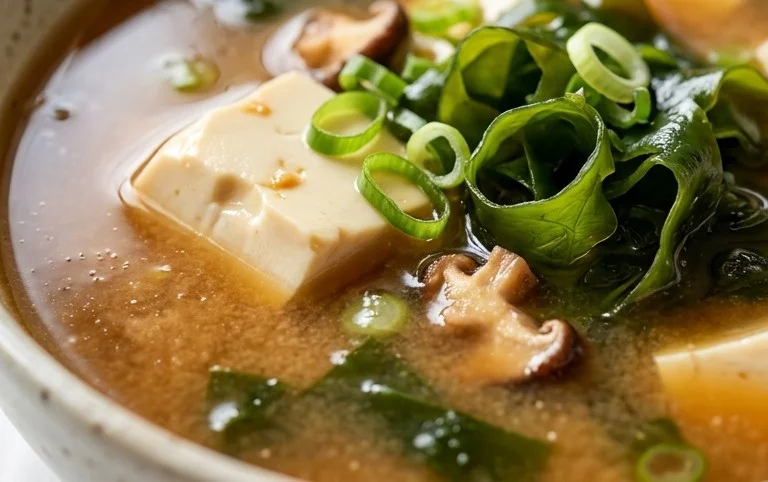
Once the miso paste is fully dissolved and incorporated into the warm dashi mixture in the small bowl, gently pour this mixture back into the saucepan with the rest of the soup. Stir gently to combine everything. Do not return the soup to the heat after adding the miso. The residual heat from the dashi is enough to warm the soup through. Ladle the miso soup into individual bowls. Garnish generously with the chopped scallions. The fresh, sharp bite of the scallions adds a beautiful contrast to the rich, savory soup. Serve immediately and savor the comforting warmth and delicious umami. This simple yet profound soup is a testament to the elegance of Japanese cooking. Enjoy your homemade miso soup!
Conclusion:
There you have it! Crafting a delicious and authentic miso soup recipe at home is surprisingly straightforward and incredibly rewarding. This recipe is fantastic because it’s not only packed with savory umami flavor, thanks to the star ingredient, miso paste, but it’s also incredibly versatile and can be adapted to your personal preferences. Whether you’re looking for a light and comforting starter or a satisfying side dish, this miso soup is sure to become a staple in your culinary repertoire. I highly encourage you to give it a try; you’ll be amazed at how easily you can create this Japanese classic!
Serve this delightful miso soup piping hot alongside your favorite Japanese dishes like sushi, ramen, or teriyaki. It also makes a wonderful light lunch on its own, perhaps with a sprinkle of extra green onions and a side of rice. Don’t be afraid to experiment with variations! Add silken tofu for extra protein, mushrooms like shiitake or enoki for more earthy depth, or even a handful of spinach for added nutrients and color. The possibilities are truly endless, making each bowl a unique and personal creation.
Frequently Asked Questions:
What kind of miso paste should I use for miso soup?
For a classic miso soup, red miso (aka miso) offers a robust, savory flavor, while white miso (shiro miso) provides a milder, sweeter taste. A combination of both can also create a wonderfully complex flavor profile. Experiment to find your favorite!
Can I make miso soup ahead of time?
Miso soup is best enjoyed fresh as the miso paste can lose some of its flavor and beneficial properties if boiled for too long. While you can prepare the dashi broth ahead of time and store it in the refrigerator, it’s recommended to add the miso paste and other delicate ingredients just before serving.
How can I make my miso soup richer in flavor?
To enhance the flavor, consider using good quality kombu (dried kelp) and katsuobushi (bonito flakes) for your dashi broth. You can also add a splash of soy sauce or a pinch of sugar to balance the flavors, and don’t forget to use fresh, high-quality miso paste for the best results.

Miso Soup Recipe
A simple and comforting classic Japanese miso soup, easily customizable with your favorite ingredients.
Ingredients
-
2½ cups Dashi
-
1 heaping tablespoon dried seaweed
-
4 oz silken tofu (cut into small pieces)
-
2-2½ tablespoons miso paste (or to taste)
-
1 tablespoon scallion (chopped)
-
1 teaspoon sesame oil
Instructions
-
Step 1
In a medium saucepan, bring the Dashi broth to a gentle simmer over medium heat. -
Step 2
Add the dried seaweed to the simmering Dashi and let it rehydrate for about 2-3 minutes. -
Step 3
Gently add the silken tofu pieces to the pot. Be careful not to break them apart too much. -
Step 4
In a small bowl, whisk the miso paste with a ladleful of the warm Dashi until smooth and fully dissolved. This prevents clumps. -
Step 5
Pour the dissolved miso mixture back into the saucepan. Stir gently. -
Step 6
Heat the soup gently until it is hot but not boiling, as boiling can diminish the flavor of the miso. Stir in the sesame oil. -
Step 7
Ladle the miso soup into bowls and garnish with chopped scallions before serving.
Important Information
Nutrition Facts (Per Serving)
It is important to consider this information as approximate and not to use it as definitive health advice.
Allergy Information
Please check ingredients for potential allergens and consult a health professional if in doubt.



Leave a Comment