


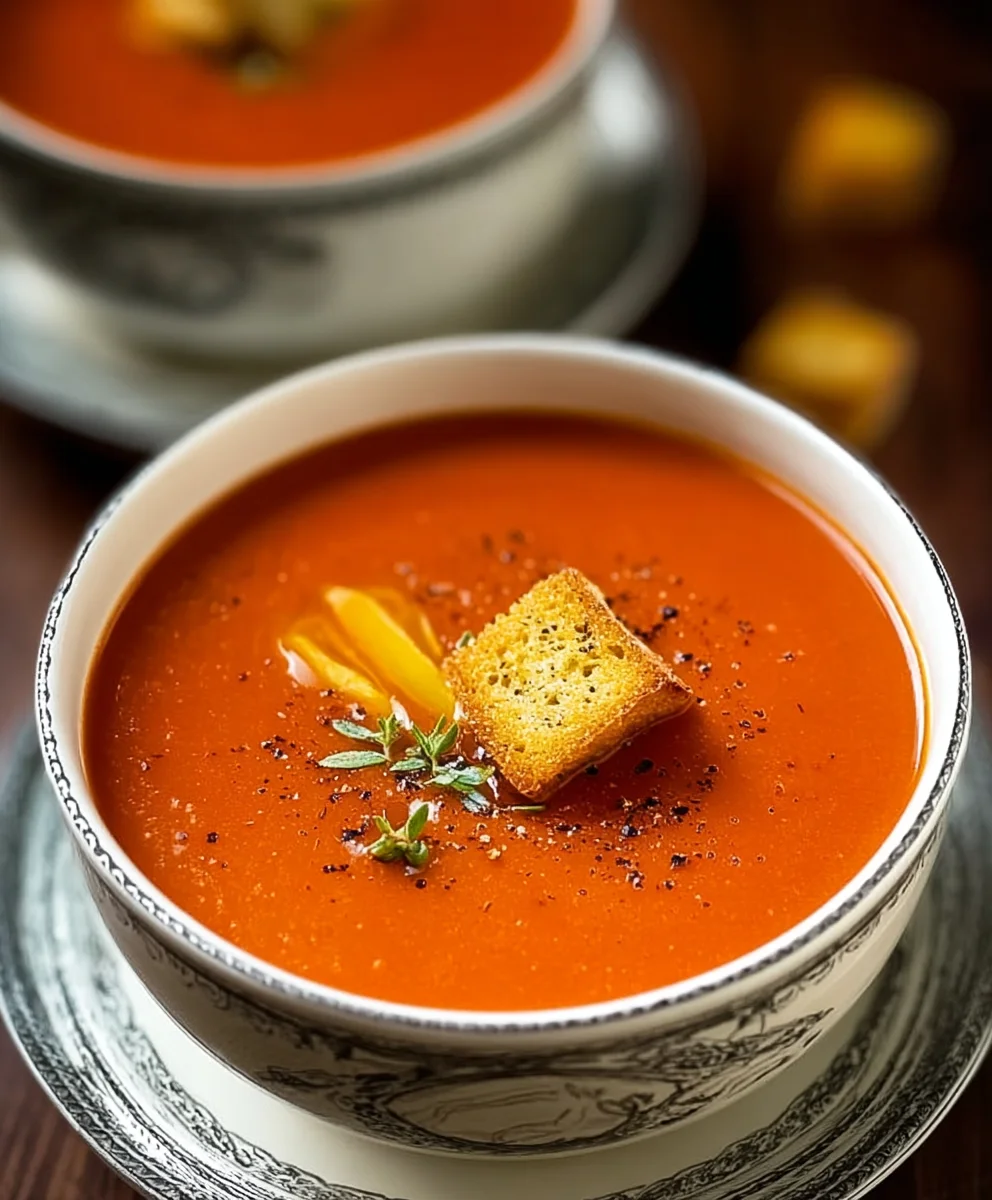
Homemade Tomato Soup is more than just a meal; it’s a comforting embrace in a bowl, a nostalgic whisper of simpler times, and a delicious testament to the magic that happens when a few quality ingredients come together. There’s a profound satisfaction in crafting this classic from scratch, a process that transforms humble tomatoes into a velvety, soul-warming elixir. Forget those watery, bland canned versions; this homemade tomato soup delivers an explosion of ripe, sweet tomato flavor, balanced perfectly with aromatic herbs and a creamy, luxurious texture that coats your tongue. It’s the ultimate comfort food, perfect for a chilly evening, a sick day, or simply when you crave something truly satisfying. What makes it so special? It’s the depth of flavor we build, the vibrant color that speaks of sunshine, and the fact that it’s made with love, entirely from your own kitchen.

Ingredients:
- 2 tablespoons unsalted butter
- 2 tablespoons olive oil
- 1 sweet onion, diced
- 1 large garlic clove, minced
- 2 tablespoons all-purpose flour
- 1½ cups chicken or vegetable stock, warmed
- 28 ounces canned whole tomatoes, undrained
- 2 tablespoons tomato paste
- 1 teaspoon white sugar
- ½ teaspoon fresh thyme leaves (or 1 tsp dried thyme)
- ½ teaspoon black pepper
- 1 teaspoon salt, or to taste
Preparing the Aromatics
This stage is all about building a foundational layer of flavor for your homemade tomato soup. We’ll start by gently sautéing the aromatics, which will release their natural sweetness and depth. Take a large pot or Dutch oven and place it over medium heat. Add the unsalted butter and olive oil to the pot. Allow the butter to melt completely and the olive oil to shimmer slightly. This combination of fats provides a rich base for sautéing. Once the fats are hot, carefully add your diced sweet onion to the pot. Stir the onion frequently with a wooden spoon or spatula. We’re not looking for browning here, but rather for the onions to soften and become translucent. This process typically takes about 5-7 minutes. You’ll notice the onions begin extract to release their moisture and their sharp aroma will mellow into a sweeter scent. As the onions soften, add your minced garlic clove. Stir the garlic with the onions and cook for just about 1 minute more, until it’s fragrant. Be careful not to burn the garlic, as burnt garlic can impart a bitter flavor to your soup.
Developing the Flavor Base
Now that our aromatics are softened and fragrant, it’s time to introduce the element that will help thicken our soup and bind the flavors together. Sprinkle the all-purpose flour evenly over the sautéed onions and garlic. This is called making a roux. Stir the flour into the onion and garlic mixture continuously for about 1-2 minutes. The flour will absorb some of the fat and toast slightly, which helps to cook out the raw flour taste. It will form a thick paste. Keep stirring to prevent any clumps from forming and to ensure the flour is evenly distributed. This roux will act as a natural thickener for our soup, giving it a lovely creamy consistency without the need for actual cream.
Adding the Tomatoes and Stock
With our flavor base established, we’re ready to introduce the star of the show – the tomatoes! Pour in the canned whole tomatoes, including their juices. The juice from the can is packed with flavor and will contribute significantly to the overall taste of the soup. Next, add the tomato paste. The tomato paste is concentrated tomato goodness and will deepen the tomato flavor and add a lovely richness. Stir everything together to combine. Gradually pour in the warmed chicken or vegetable stock. Warming the stock beforehand helps to prevent a sudden temperature drop in the pot, which can affect the cooking process and the texture of the roux. Stir well to ensure the stock is fully incorporated and to break up any clumps of tomato paste.
Simmering and Infusing
Now it’s time to let all these wonderful ingredients meld together. Bring the mixture in the pot to a gentle simmer. Once it’s simmering, reduce the heat to low, cover the pot loosely (leaving a small gap for steam to escape), and let it cook for at least 20-30 minutes. This simmering period is crucial for allowing the flavors to deepen and harmonize. The tomatoes will break down further, and the soup will thicken nicely. During this time, you can stir the soup occasionally to prevent anything from sticking to the bottom of the pot. This is also a good time to add your flavor enhancers. Stir in the white sugar, which will help to balance the acidity of the tomatoes, making the soup taste smoother and more rounded. Add the fresh thyme leaves (or dried thyme), black pepper, and salt. Taste the soup and adjust the salt and pepper as needed. Remember, you can always add more salt, but you can’t take it away, so start conservatively.
Achieving the Perfect Texture
Once the soup has simmered and the flavors have developed, you’ll likely want to achieve your desired texture. For a smoother soup, carefully transfer the hot soup to a blender, working in batches if necessary. Be extremely cautious when blending hot liquids, as the steam can build up pressure. Remove the small cap from the blender lid and cover the opening with a folded kitchen towel. This allows steam to escape safely. Blend until smooth. Alternatively, you can use an immersion blender directly in the pot. Move the immersion blender around the pot, blending until you reach your preferred consistency. For a chunkier soup, you can skip this blending step or pulse the blender just a few times to break down only some of the tomatoes. After blending, return the soup to the pot if you used a traditional blender. Gently reheat the soup over low heat, stirring occasionally, until it is warmed through. This final heating ensures everything is perfectly hot and ready to serve. You might find that after blending, the soup has thinned slightly, so a brief simmer can help it thicken up again.
Conclusion:
And there you have it – a step-by-step guide to creating the most delightful Homemade Tomato Soup! We’ve journeyed from selecting the freshest tomatoes to achieving that perfect velvety texture. This soup is more than just a meal; it’s a hug in a bowl, brimming with the comforting taste of ripe tomatoes, aromatic herbs, and a touch of richness. I encourage you to try this recipe, experiment with its possibilities, and make it your own. Don’t be afraid to get creative and enjoy the process!
When it comes to serving, this Homemade Tomato Soup is incredibly versatile. It’s a classic pairing with grilled cheese sandwiches, of course, but also shines alongside crusty bread, a fresh salad, or even as a base for other dishes like pasta bakes. Feel free to swirl in a dollop of heavy cream, sour cream, or a vegan alternative for extra decadence, or sprinkle with fresh basil, chives, or a pinch of red pepper flakes for a little zest.
For those who enjoy variations, you can deepen the flavor by roasting your tomatoes beforehand, or add a touch of sweetness with a caramelized onion or a pinch of sugar. A splash of balsamic vinegar can also add a wonderful depth. Embrace the flexibility of this recipe and make it your signature dish!
FAQs:
Can I use canned tomatoes for this Homemade Tomato Soup?
Absolutely! If fresh tomatoes aren’t in season or you’re short on time, high-quality canned whole peeled tomatoes (San Marzano are excellent) work wonderfully. Just drain them and proceed with the recipe. You might need to adjust the simmering time slightly.
How can I make this Homemade Tomato Soup vegan?
This recipe is easily made vegan by substituting the butter with olive oil or vegan butter. For the creaminess, you can use full-fat coconut milk (the kind in a can, not the beverage), cashew cream, or a store-bought vegan heavy cream alternative. Ensure any broth you use is also vegetable-based.
Can I freeze leftovers of this Homemade Tomato Soup?
Yes, Homemade Tomato Soup freezes beautifully! Let the soup cool completely before transferring it to airtight containers or freezer bags. It can be stored in the freezer for up to 3 months. Thaw it in the refrigerator overnight and reheat gently on the stovetop or in the microwave.

Easy Homemade Tomato Soup
A classic, comforting, and easy homemade tomato soup that’s perfect for a cozy meal. This recipe builds layers of flavor for a rich and satisfying soup.
Ingredients
-
2 tablespoons unsalted butter
-
2 tablespoons olive oil
-
1 sweet onion, diced
-
1 large garlic clove, minced
-
2 tablespoons all-purpose flour
-
1½ cups chicken or vegetable stock, warmed
-
28 ounces canned whole tomatoes, undrained
-
2 tablespoons tomato paste
-
1 teaspoon white sugar
-
½ teaspoon fresh thyme leaves
-
½ teaspoon black pepper
-
1 teaspoon salt
Instructions
-
Step 1
In a large pot or Dutch oven over medium heat, melt the butter with the olive oil. Add the diced sweet onion and sauté until softened and translucent, about 5-7 minutes. Add the minced garlic and cook for 1 minute more until fragrant, being careful not to burn it. -
Step 2
Sprinkle the all-purpose flour evenly over the sautéed onions and garlic. Stir continuously for 1-2 minutes to form a thick paste, cooking out the raw flour taste. This creates a roux. -
Step 3
Pour in the canned whole tomatoes with their juices and the tomato paste. Stir to combine. Gradually pour in the warmed chicken or vegetable stock, stirring well to incorporate and break up any clumps. -
Step 4
Bring the mixture to a gentle simmer. Reduce heat to low, cover loosely, and let cook for 20-30 minutes, stirring occasionally. During this time, stir in the white sugar, thyme, black pepper, and salt. Taste and adjust seasoning as needed. -
Step 5
For a smoother soup, carefully transfer the hot soup to a blender (in batches if necessary, with the blender lid cap removed and covered with a towel to allow steam to escape) or use an immersion blender directly in the pot. Blend until smooth or to your desired consistency. For a chunkier soup, skip blending or pulse briefly. -
Step 6
Return the soup to the pot if using a traditional blender. Gently reheat over low heat until warmed through. Serve hot.
Important Information
Nutrition Facts (Per Serving)
It is important to consider this information as approximate and not to use it as definitive health advice.
Allergy Information
Please check ingredients for potential allergens and consult a health professional if in doubt.



Leave a Comment