


Blueberry Lemon Sourdough Bread is more than just a breakfast treat; it’s an experience. Imagin extracte the tangy, slightly sour notes of a perfectly fermented sourdough starter mingling with the bright, zesty perfume of fresh lemon zest, all studded with plump, juicy blueberries that burst with sweetness. This isn’t your average loaf. What truly sets Blueberry Lemon Sourdough Bread apart is the incredible depth of flavor and the wonderfully chewy texture that only a well-crafted sourdough can deliver. People adore it because it strikes that perfect balance between comforting familiarity and delightful surprise. It’s the ideal accompaniment to your morning coffee, a refreshing afternoon snack, or even a subtly sweet dessert. The vibrant pops of blue from the berries against the golden-brown crust are as beautiful as they are delicious, making it a showstopper for any occasion. Prepare to fall in love with this extraordinary bread.

Ingredients:
- 3 cups bread flour
- 1⅓ cups lukewarm water
- ¾ cup active, bubbly, and well-fed sourdough starter
- 3 tablespoons white sugar
- 1 teaspoon salt
- 1¼ cup fresh blueberries
- 1 tablespoon lemon zest
Preparing Your Dough
Mixing the Dough
Let’s get started on creating a beautiful Blueberry Lemon Sourdough Bread! Begin extract by combining the lukewarm water and your active sourdough starter in a large mixing bowl. Gently whisk them together until the starter is mostly dispersed. The water should feel comfortably warm to the touch, not hot, as excessive heat can kill the wild yeast in your starter. Aim for a temperature around 75-80°F (24-27°C). Next, add the bread flour, white sugar, and salt to the bowl. Using a sturdy spoon or your hands, mix everything together until a shaggy dough forms. There’s no need to knead at this stage; we’re just aiming to incorporate all the ingredients. Cover the bowl with a damp kitchen towel or plastic wrap and let it rest for about 30 minutes. This autolyse period allows the flour to hydrate and gluten developmegin extractto begin, making the dough easier to work with later.
Developing the Gluten
After the 30-minute rest, it’s time to develop the gluten structure. Wet your hands slightly to prevent sticking. Reach into the bowl, grab a portion of the dough, stretch it up, and fold it over onto itself. Rotate the bowl a quarter turn and repeat this stretching and folding motion. Continue this process for about 5-10 minutes. You’ll notice the dough becoming smoother and more elastic with each fold. It will start to pull away from the sides of the bowl more cleanly. This technique, often called “stretch and folds,” is a gentle way to build strength in your sourdough without intense kneading. You want to achieve a dough that feels cohesive and has some resistance when you stretch it. Once you’ve reached this point, cover the bowl again and let it rest for another 30 minutes.
Adding the Flavor Burst
Incorporating Lemons and Berries
Now for the delightful additions that make this bread so special! In a small bowl, gently toss the fresh blueberries with the lemon zest. The zest will lightly coat the berries, helping to distribute its bright, citrusy aroma throughout the bread. It also helps prevent the blueberries from bleeding too much color into the dough during the later stages. When you’re ready to add them to your dough, take your slightly developed dough and gently spread it out on a lightly floured surface. Sprinkle the lemon zest-coated blueberries evenly over the dough. Then, perform another series of stretch and folds, similar to what you did before, to incorporate the blueberries and zest into the dough. Be gentle to avoid bursting too many berries. The goal is to distribute them as evenly as possible, creating little pockets of flavor and color throughout the loaf.
Bulk Fermentation and Shaping
The Bulk Fermentation Journey
After incorporating the blueberries and lemon zest, place the dough back into a clean, lightly oiled bowl. Cover it once more and let it undergo its bulk fermentation. This is the primary fermentation period where the sourdough starter works its magic, leavening the dough and developing complex flavors. The duration of bulk fermentation can vary significantly depending on the ambient temperature of your kitchen and the activity of your starter. Generally, it can take anywhere from 4 to 8 hours, or even longer in cooler environments. During this time, you’ll want to perform a few more sets of stretch and folds, about every 1 to 1.5 hours, for the first 2-3 hours of the bulk fermentation. This will continue to strengthen the dough. You’re looking for the dough to increase in volume by about 30-50%, feel airy, and show some visible bubbles on the surface.
Shaping Your Loaf
Once the bulk fermentation is complete, gently turn the dough out onto a lightly floured work surface. Be careful not to degas it too much. Lightly pre-shape the dough into a rough round or oblong shape, depending on your desired final loaf form. Let it rest, uncovered, for about 15-20 minutes. This resting period allows the gluten to relax, making the final shaping much easier. After the rest, perform your final shaping. For a round loaf (boule), gently pull the edges of the dough towards the center, creating tension on the surface. Flip the dough over and cup your hands around it, rotating it on the work surface to create a taut surface. For an oblong loaf (batard), fold the top third down, then the bottom third up, and then seal the seam. Place the shaped dough seam-side up into a well-floured proofing basket (banneton) or a bowl lined with a floured kitchen towel.
Proofing and Baking
The Cold Proofing Stage
Cover the proofing basket with plastic wrap or place it inside a plastic bag to prevent the dough from drying out. Now, it’s time for the cold proofing stage, which is crucial for developing flavor and making the dough easier to handle for baking. Place the covered basket into the refrigerator for at least 12 hours, and up to 24-48 hours. The cold temperature slows down the yeast activity, allowing enzymes to break down starches into sugars, which contributes to deeper flavor and better crust development. This extended cold fermentation also makes the dough firmer and easier to score.
Baking to Perfection
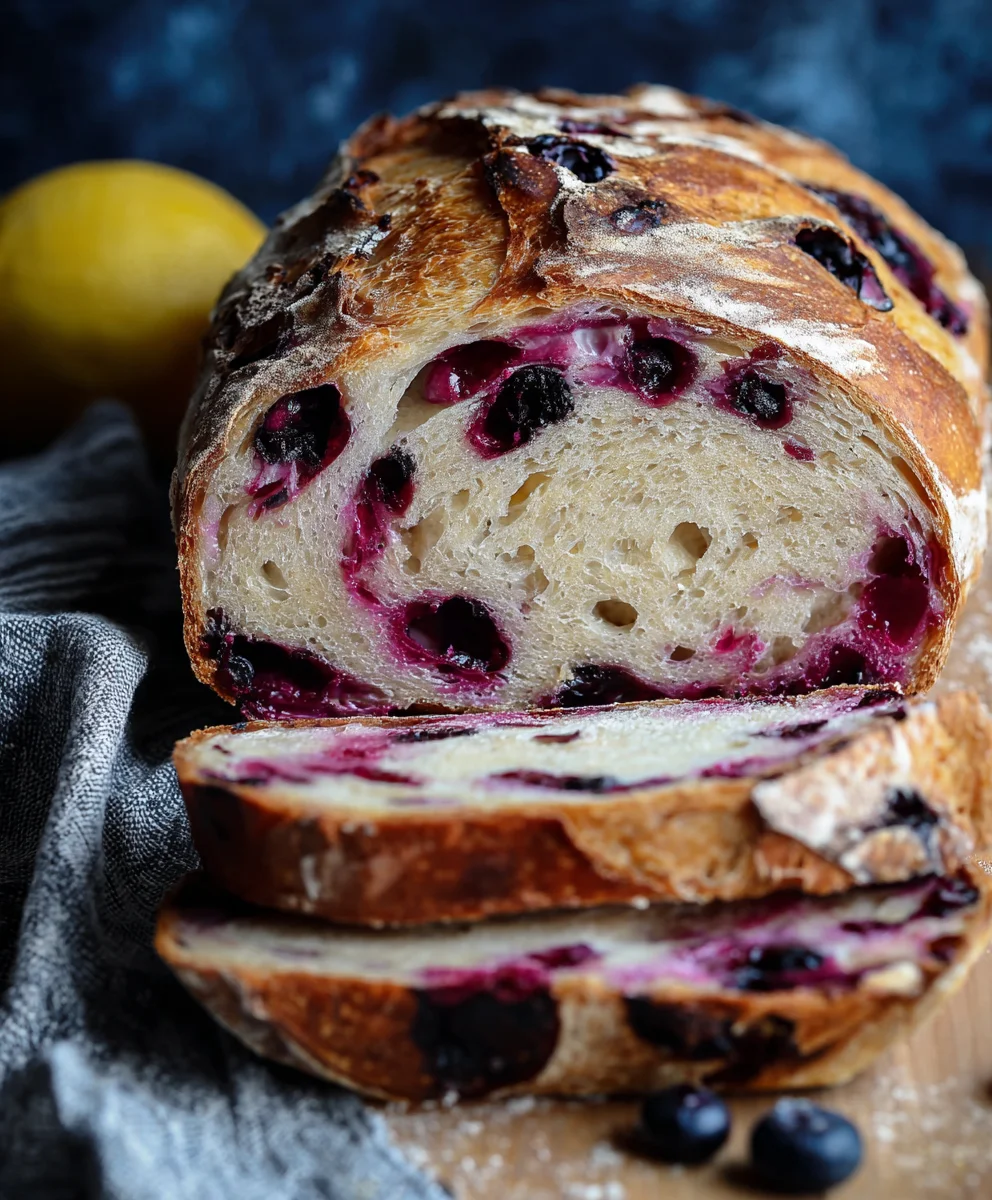
When you’re ready to bake, preheat your oven to 450°F (230°C) with your Dutch oven inside for at least 30 minutes. This intense heat and the trapped steam created by the Dutch oven are essential for a good oven spring and a crispy crust. Once the oven is fully preheated, carefully remove the Dutch oven from the oven. Gently invert your proofed dough onto a piece of parchment paper. Score the top of the dough with a sharp knife or a lame to allow for controlled expansion during baking. Carefully lift the dough using the parchment paper and lower it into the hot Dutch oven. Place the lid back on and bake for 20 minutes. After 20 minutes, remove the lid from the Dutch oven and continue baking for another 20-25 minutes, or until the crust is a deep golden brown and the internal temperature of the bread reaches around 200-210°F (93-99°C). Let the bread cool completely on a wire rack before slicing to allow the internal structure to set. Enjoy your delicious Blueberry Lemon Sourdough Bread!
Conclusion:
We’ve reached the end of our delightful journey creating the Blueberry Lemon Sourdough Bread. This recipe masterfully combines the tangy depth of sourdough with the bright bursts of fresh blueberries and the zesty aroma of lemon. The resulting loaf is a beautiful balance of sweet and tart, with a wonderfully chewy crust and a soft, yielding crum extractb. I hope you’ve enjoyed baking this delicious treat as much as I have!
This Blueberry Lemon Sourdough Bread is incredibly versatile. Serve it warm, lightly toasted with a smear of butter for breakfast or a snack. It also makes an exquisite base for French toast, or a unique accompaniment to a brunch spread. For a truly special dessert, consider serving thick slices with a dollop of whipped cream or a light lemon curd.
Don’t be afraid to experiment! You can swap the blueberries for raspberries or blackberries, or even add a pinch of cardamom for an extra layer of warmth. If you’re not a fan of lemon, a touch of orange zest can offer a different citrusy profile. The possibilities are as endless as your culinary creativity!
Baking sourdough can be a rewarding and therapeutic process, and this Blueberry Lemon Sourdough Bread is a perfect example of its potential. So, gather your ingredients, fire up your oven, and enjoy the satisfaction of pulling this gorgeous loaf out. Happy baking!
Frequently Asked Questions:
Q: My sourdough starter isn’t very active. Will my Blueberry Lemon Sourdough Bread still turn out?
A: While an active starter is crucial for a good rise and the characteristic sourdough tang, you might still achieve a decent loaf with a less vigorous starter. However, the texture might be denser, and the rise less pronounced. Consider feeding your starter a couple of times to boost its activity before embarking on this recipe for the best results.
Q: Can I use frozen blueberries instead of fresh?
A: Yes, you can absolutely use frozen blueberries. It’s best to use them directly from frozen without thawing, as thawing can release too much moisture and make your dough overly wet. You might also want to toss them in a tablespoon of flour before adding them to the dough to help absorb some of the excess liquid.
Blueberry Lemon Sourdough Bread
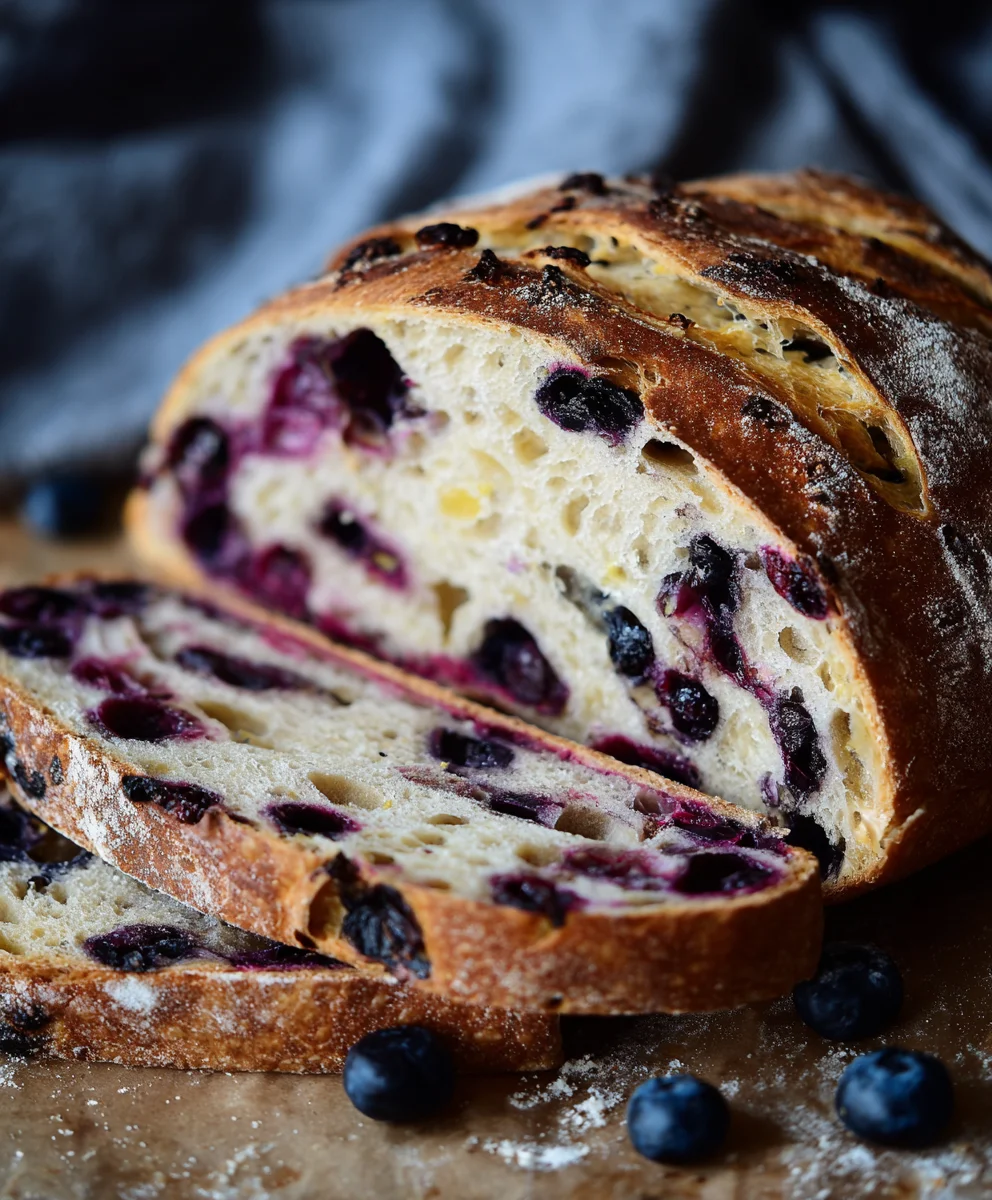
A delightful sourdough bread recipe featuring the tartness of blueberries and the bright zest of lemon, creating a perfectly balanced tart and sweet flavor profile.
Ingredients
-
3 cups bread flour
-
1⅓ cups lukewarm water
-
¾ cup active, bubbly, and well-fed sourdough starter
-
3 tablespoons white sugar
-
1 teaspoon salt
-
1¼ cup fresh blueberries
-
1 tablespoon lemon zest
Instructions
-
Step 1
In a large bowl, whisk together lukewarm water and active sourdough starter until mostly dispersed. Add bread flour, white sugar, and salt. Mix until a shaggy dough forms. Cover and let rest for 30 minutes for autolyse. -
Step 2
Perform stretch and folds for 5-10 minutes until the dough is smoother and more elastic, pulling away from the sides of the bowl. Cover and rest for another 30 minutes. -
Step 3
In a small bowl, toss fresh blueberries with lemon zest. Gently spread the dough on a lightly floured surface. Sprinkle the lemon zest-coated blueberries evenly over the dough. Perform another series of stretch and folds to incorporate them. -
Step 4
Place the dough in a clean, lightly oiled bowl. Cover and let it undergo bulk fermentation for 4-8 hours, performing stretch and folds every 1-1.5 hours for the first 2-3 hours. The dough should increase in volume by 30-50% and appear airy with visible bubbles. -
Step 5
Gently turn the dough onto a lightly floured surface. Pre-shape into a round or oblong. Let rest for 15-20 minutes. Perform final shaping, creating tension on the surface. Place seam-side up into a floured proofing basket. -
Step 6
Cover the proofing basket and refrigerate for at least 12 hours, up to 24-48 hours for cold proofing. -
Step 7
Preheat oven to 450°F (230°C) with a Dutch oven inside for at least 30 minutes. Carefully invert the proofed dough onto parchment paper. Score the top. Lower the dough into the hot Dutch oven using parchment paper. Bake covered for 20 minutes. Remove lid and bake for another 20-25 minutes until deep golden brown.
Important Information
Nutrition Facts (Per Serving)
It is important to consider this information as approximate and not to use it as definitive health advice.
Allergy Information
Please check ingredients for potential allergens and consult a health professional if in doubt.



Leave a Comment